

Nagano-born animator-illustrator, forged at Trigger, orchestrates fluid lines and luminous shadows with breathtaking precision, weaving fairy-tale enchantment into award-winning illustrations, her vividly-colored, exquisitely-detailed visions magically commanding angle, distance, and speed in sublime visual symphonies.

YooshiQ's Note
If you like this artist, you may also like

Alariko

Toshio Ishizaki
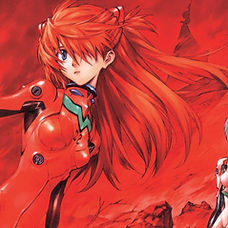
Yoshiyuki Sadamoto

Kenichi Yoshida

DenQ
About this artist
Born in Nagano Prefecture in 1988, Yoneyama Mai occupies a distinctive position as an illustrator, animator, and artist. Following her tenure at an animation company, she launched her independent illustration practice in 2018, producing book covers and advertisements. Her emergence in the contemporary art scene was marked by solo exhibitions "SHE" in 2019 and "EGO" in 2021, while her 2023 exhibition "EYE" at PARCO MUSEUM TOKYO showcased layered works featuring UV printing on acrylic.
The foundation of Yoneyama's practice was laid during her high school years when she encountered the illustration collection "edge collection & paintings" (2004, T.O Entertainment). Originally drawn to the works of okama and Akihiro Tajima, she was astonished by the high level of drawings contributed by animators including Koji Morimoto, Takeshi Koike, Kenichi Yoshida, Kazuya Tsurumaki, Hiroyuki Imaishi, Yoh Yoshinari, and Sushio. This discovery prompted exhaustive viewing of classic theatrical animations and OVAs including "AKIRA" (1988). She was particularly impacted by Mamoru Oshii's "Mobile Police Patlabor 2 the Movie" (1993) and "GHOST IN THE SHELL / Ghost in the Shell" (1995), feeling strongly attracted to the rigid body depictions created by animators Kazuchika Kise, Shinji Oohira, and Hiroyuki Okiura. From this point, she strongly recognized the importance of pursuing body depiction based on precise sketching.
After joining Gainax as an animator, Yoneyama handled her first key animation on "Panty & Stocking with Garterbelt" (2010) and later worked extensively on "Kill la Kill" (2013-14) following her move to Trigger. Her core foundation lies in animation pursuing reality based on skeletal movement and weight shift. She has strongly been conscious of strength as a single image and precision of drawing since becoming an animator.
Character design work on "Kiznaiver" (2016) and for Racing Miku—the Hatsune Miku character created for a racing team sponsored by Good Smile Company—provided her first substantial funds as an individual illustrator, enabling her to launch personal creative activities. The ending credits for "Darling in the Franxx" (2018) proved pivotal, as she experienced the entire process of drawing, coloring, designing, and creating key animation. This gave her the realization that she could move between animation and illustration as two wheels while maintaining her own color.
Yoneyama demonstrates strong commitment to digital illustrations printed with UV printing, a technique she originally encountered when attempting to print on transparent materials and acrylic as an expression of her feelings about valuable cel animation that would disperse. She became fascinated by the expressiveness and breadth of the UV printing medium and its compatibility with digital illustrations, making detailed adjustments in plate creation and printing direction to realize the concept and texture of her illustrations. Recently she has also challenged analog expression, increasing the ratio of hand-painted works from last year's exhibition. In May, through a live painting session with illustrator Katsuya Terada, she recognized anew the power of live brushwork. She seeks an intermediate texture between digital and analog, applying gesso several times and polishing smoothly to create a smooth wall close to UV print resin.
Her motivation to sustain both animator and artist pillars reflects a connection to Japanese animation culture. She does not separate art and animation, considering the techniques and culture of Japanese animation, especially limited animation, as important things she wants to continue protecting as an individual. She hopes that by moving between the worlds of illustration and fine art, she can help break down the wall that makes Japanese animation, though passionately loved overseas, "taken for granted" and difficult to properly evaluate domestically. She wishes everyone would unravel and be passionate about direction intentions and amazing techniques behind animation production like reading exhibition explanations.
Looking ahead, Yoneyama wants to mature as an artist while setting her own balance, not constrained by frames of animator or illustrator. She aims to challenge live painting and media art, organize illustration festivals, and take on long independent animation productions, hoping her works could become a catalyst for expanding the breadth of expression for the next generation.


Mai Yoneyama is the sole artist of ART SCRAMBLE 11 at Grand Front Osaka, scheduled through March 2027. The install moves her line off the screen: a plaza drawing, plus sculptures including Reflection and arc. It is the public, still-open counterpart to the Kyoto solo that closed in August.
Share this artist via
Explore other artists from the index


FOR EXHIBITED ART WORKS © ALL RIGHTS RESERVED BY THE ARTIST
© 2026 BY YOOSHIQ VISUALS