

Dutch synesthetic visionary, raised amid painterly pigments and progressive rock, orchestrates "ancient-futuristic" perceptual worlds where melancholic architecture meets spiritual symbolism—his Times Square-lit Medici breakthrough and Christie's 6 ETH "Citadel" sale proving digital handcraft makes souls finally feel understood.

YooshiQ's Note
About this artist
Dutch visionary artist Jesperish works across fine art, design, and immersive media, exploring identity, emotion, and symbolic systems through what he calls "perceptual worlds of the ancient future." His architectural structures and spatial compositions suggest energetic environments — spaces that invite reflection, growth, and internal shift — through symbolism that, in his own words, "speaks to intuition."
Born in 1996 and raised in the Netherlands by a painter mother and a music-obsessed father, Jesperish grew up in a childhood that unfolded, as one profile put it, "like a synesthetic score": progressive rock became colour, emotion became form, and gaming became his first canvas. By nine or ten he was already manipulating layers in Photoshop CS2 on his father's work laptop, and the fan art he made for online gaming communities gradually evolved into a signature visual language — "melancholic, spiritual, and filled with abstract architecture," yet always grounded in very personal experiences. He went on to study Multimedia Design and then Interactive Game and Architecture Design at Breda University of Applied Sciences, and since 2009 has shared digital timelapse work online, building communities and organizing events that supported emerging artists.
That sensitivity has a name. Since childhood, he has seen visuals when listening to music or feeling strong emotions; he later learned from another artist that this is called synesthesia. These days he finds inspiration through music, nature, visiting ancient places, meditation, energy work, and philosophy. His process usually starts with a vision or a feeling: sketches in pencil or fineliner are digitized and layered in Adobe Photoshop, texture work created in Adobe After Effects is blended into the composition, and the final piece is digitally painted — sometimes animated. The result blends digital techniques with "a handmade feel," visuals that feel like they came from "some alternate, ancient-futuristic civilization."
That language found a global audience in 2021, when his haunting digital painting "The burden which is well borne becomes the light" sold to Cozomo de' Medici — one of the biggest sales on Tezos at the time — and lit up Times Square in New York as part of the Medici Collection. His works have since appeared at Sotheby's and Christie's, including "Embracing the Citadel's Challenge," which sold for 6 ETH at Christie's New York in 2024, and he has collaborated with studios including Marvel.
His latest body of work, "NETRA," launched on May 5 via NINFA, pushes that vision further inward: encompassing a 1/1 auction and 100 fully pre-sold digital artworks bound by the motif of the eye, it stages a visual pilgrimage through perception and the search for inner clarity. Drawing on ancient symbolism, "NETRA" is "a demand for slowness in an era of velocity." "We are all living mirrors," he writes — and in "NETRA," each gaze becomes an invitation to look back.
Perhaps the deepest measure of his reach came recently, when someone told him they "finally felt understood as a soul" through his art — and started creating themselves. It is a gift, he says, that he is moved to give to others.


If you like this artist, you may also like

Misha Bart
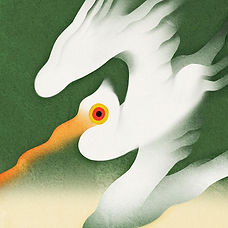
Yuka Kurita

Archan Nair

Lena Rivo

Ruslan Golovko
Share this artist via
Explore other artists from the index


FOR EXHIBITED ART WORKS © ALL RIGHTS RESERVED BY THE ARTIST
© 2026 BY YOOSHIQ VISUALS